The Rise of the AI Coworker: What Knowledge Work Looks Like in 2026
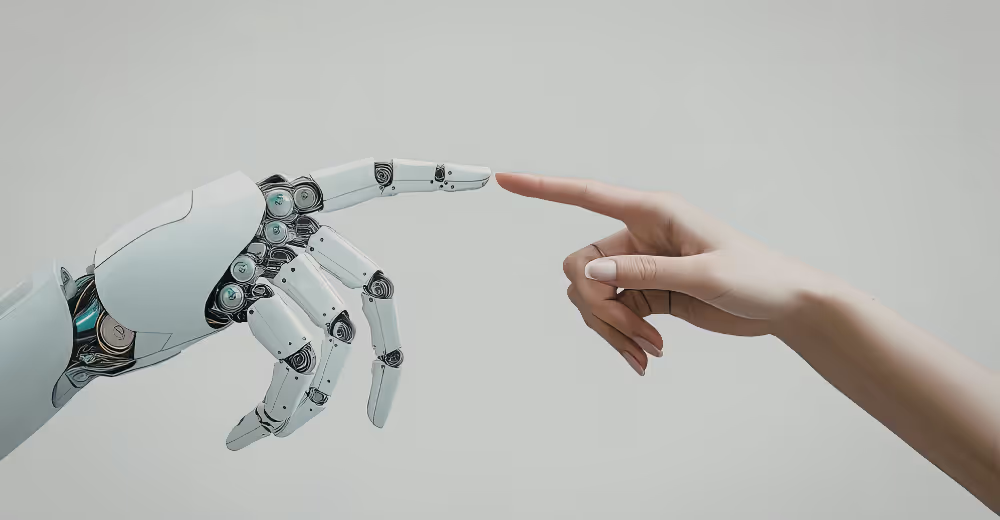
Your newest coworker doesn’t take a lunch break, doesn’t grumble about meetings and has never asked for time off.
It might also be better than you at a good part of your job.
Not all of it, and not yet. But think about the work you put off. The expense reports that eat Friday afternoon, the client briefing deck you rebuild from last quarter’s, the research that was supposed to take 20 minutes and took 3 hours. AI can do most of that now.
What’s interesting is that this isn’t automation in the factory sense. It’s stranger and more personal than that. The AI works alongside you instead of simply taking orders. It has views on your draft, and it remembers the project you did six months ago and ties it to what you’re doing today.
At that point it starts to feel less like software and more like a colleague.
If that sounds like Silicon Valley hype, look at what’s going on in ordinary offices in 2026.
The “Tool” Era Just Ended (And Nobody Sent a Memo)
For about two years we called these things “AI tools.”
A tool is something like a hammer or Excel. You pick it up when you need it and put it down when you’re done.
That picture no longer fits. A hammer doesn’t learn how you write. Excel doesn’t warn you that the numbers in this morning’s report disagree with last week’s data. Neither one says, “On your last five projects like this you forgot to bring in legal. Should I draft that email?”
So what’s happening in 2026 looks less like adopting software and more like onboarding a new hire.
It also feels like onboarding a new hire. It’s awkward at first. You don’t trust it with anything important, you over-explain, and you check everything it does. Then, gradually, that changes.
You stop calling it “the AI” and start thinking of it as the thing that handles X so you can spend your time on Y. That’s a role on the team, and roles are something you assign to people.
What Actually Changed Between 2024 and 2026
“AI is getting better” tells you nothing, so here are the specific changes:
1. Context Persistence Is the New Killer Feature
A couple of years ago every AI conversation started from scratch. Each time, you explained your project, your company, your role and how you like things done.
That’s mostly gone. The AI coworkers of 2026 keep context for weeks or months, across whole projects. They know what you’re working on and have read the same documents you have. They remember that you like bullet points better than paragraphs and that your boss can’t stand the word “synergy.”
Compare asking a stranger for directions with asking someone who’s been on your team for six months. That’s the difference.
2. Proactive Beats Reactive
Early AI was a fancy autocomplete. You asked, it answered.
Now it speaks up without being asked:
“You’re about to send that email, but you used different revenue numbers in the deck you sent yesterday. Which one’s correct?”
“This contract has a clause that’s different from our standard template. Flag it or approve anyway?”
“You usually schedule client check-ins two weeks after delivery. Want me to draft the invite?”
This is what makes AI feel like a colleague and not a search box. Good colleagues notice things and say so.
3. Collaboration, Not Completion
What people often miss about AI coworkers is that their job is to make you better at yours. They aren’t there to take it over.
The best knowledge workers in 2026 haven’t been replaced. They’ve learned to think with the AI.
You draft the strategy and the AI tests it against past data.
You outline the proposal and the AI writes the sections you always put off.
You have the client conversation and the AI writes the follow-up and pulls out the action items.
Think of pair programming, applied to all of your work.
4. Personality (Yes, Really)
This will sound odd: your AI coworker has a vibe.
I don’t mean it’s conscious. I mean it in the way your email voice differs from your Slack voice. The AI you use every day picks up how you communicate, how much risk you’re comfortable with and how formal you like to be.
Some people’s AI coworkers end up careful and thorough. Others end up quick and opinionated. The AI has no feelings of its own. It adjusts to yours.
Oddly, that makes it easier to work with. You don’t have to switch between the way you talk to people and the way you talk to a machine. You just work.
A Day in the Life: Knowledge Work in 2026
Here’s what a day can look like.
8:47 AM – You open your work setup
Your AI coworker has already:
- Checked your calendar and noticed that today’s 2 PM meeting clashes with the client call you booked last week
- Summarized the 47 Slack messages you missed overnight (3 need responses, 44 are noise)
- Put together a brief on the prospect you’re meeting at 10 AM: their recent funding round, the competitor they just left, and the pain points they raised in discovery
You didn’t ask for any of it. It knows what you need to start the day.
10:03 AM – Client meeting wraps
You paste your rough notes in: “Interested in enterprise plan, concerned about migration timeline, wants case study from fintech sector, follow up next Thurs”
By the time you’re back at your desk, your AI coworker has:
- Drafted a follow-up email with the fintech case study attached
- Built a migration timeline based on similar clients
- Put the Thursday follow-up on your calendar with a reminder to prepare
- Added the meeting notes and next steps to the CRM
You fix the email (it still hasn’t quite got your sign-off right), send it and move on.
2:14 PM – You’re building a board presentation
You tell your AI coworker: “Pull together Q1 performance data, compare to targets, highlight the three biggest wins and two areas we’re behind.”
It makes the slides. You don’t like how slide 4 frames things, so you say so, and it rewrites it. The new version is better.
You add a section on Q2 strategy. The AI points out that your revenue projection doesn’t match the hiring plan you sent last week. You’d forgotten you updated that plan, and the mismatch gets fixed before anyone else sees it.
4:52 PM – End of day
Your AI coworker reminds you of three things you said you’d do this week and haven’t:
- Approve the new vendor contract (legal has already reviewed it)
- Send feedback on Jamie’s draft proposal (it’s been in your inbox for 4 days)
- Add the new process you mentioned at Monday’s standup to the team wiki
You finish all three in 20 minutes because the AI set each one up for you.
You log off having done more strategic work, and less administrative junk, than you did in all of 2024.
That’s a different way of working, well beyond a productivity trick.
{{agent-library=“/snippet”}}
The Uncomfortable Questions Nobody Wants to Ask
Now for the harder part.
If AI can do 40% of your job better than you, what happens to your job?
If your company gives every knowledge worker an AI coworker, does it still need as many knowledge workers?
You should be asking both. But I think the panic is aimed at the wrong thing.
The Jobs AI Is Actually Replacing
AI is taking over knowledge tasks, which is not the same as replacing knowledge workers.
Tasks AI does better than people in 2026:
- Pulling information together and summarizing it
- First drafts of emails, reports and decks
- Scheduling and coordination
- Research and finding information
- Formatting and checking for errors
- Routine analysis and spotting patterns
Things AI still can’t do, or does badly:
- Handling office politics and stakeholders’ egos
- Reading the room in a tense negotiation
- Deciding what not to do
- Earning trust and building relationships
- Knowing when to break the rules
- Solving creative problems when the situation is unclear
- Giving a shit (appologies for my bluntness)
That last one counts for more than people think.
The New Skill: AI Delegation
The knowledge workers doing well in 2026 aren’t fighting AI. They’ve gotten good at AI delegation: knowing what to hand off and what to keep.
Good managers already do this with people. With AI it moves faster and feels stranger.
You need to know:
- What AI can do without supervision (formatting this report)
- What needs your review (drafting client communication)
- What you should never hand off (strategic decisions with political implications)
People who can’t make those calls are struggling. People who can are doing work that wasn’t possible two years ago.
The Culture Shock Is Real (And Companies Are Handling It Badly)
Few people say this out loud, but adding AI coworkers to a team is strange. Installing new software is easy by comparison. This changes how the organization works.
The Trust Problem
You have a coworker who is never wrong about facts, except when it confidently invents them. How do you work with that?
You have a coworker who does in 10 seconds what used to take you 3 hours. Does that free you, or make you feel replaceable?
You have a coworker who never tires, never gets upset and never needs encouragement. Does that change how you see your own worth?
These are problems about how people feel, and better software won’t solve them. Yet most companies are rolling out AI as if it were a software install, when it’s really a change in culture.
The New Office Dynamics
Some teams have taken to AI coworkers so fully that they’ve reorganized around them. Roles and responsibilities have moved. The junior analyst job is gone because the AI does it better.
Other teams are in denial. They have AI tools that nobody uses, because leaders haven’t used them visibly, haven’t made it safe to experiment and haven’t said what good work looks like now.
The distance between those two kinds of team is growing quickly. By the end of 2026 you’ll be able to tell which companies committed and which ones waited. It will show in how fast they move, how good their work is and whether strong people want to join them.
The best knowledge workers want to work with AI coworkers. Once they’ve handed off the boring parts and spent their time on the work that counts, going back feels like doing math without a calculator.
What This Means for Your Career (The Part You Actually Care About)
Now the practical part. If you’re a knowledge worker in 2026, these are the things to think about:
1. Your Value Is Shifting from Execution to Judgment
Speed counts for less now, because AI is faster. Thoroughness counts for less too, because AI doesn’t skip steps.
What counts is whether you can tell good output from great output, steer the AI back when it goes off course, and ask the right questions. Judgment is taking the place that execution used to hold.
2. Specialization Beats Generalization (For Now)
AI is decent at nearly everything.
If what you offer is “I’m competent at a wide range of tasks,” you have a problem. AI is more competent and doesn’t sleep.
If you’re the person who knows your industry, your customers and your company’s odd internal politics in depth, AI can’t replace that. Deep expertise plus an AI coworker is a very strong combination. A shallow generalist with no AI skills will have a hard time.
3. Learn to Manage Non-Human Coworkers
This is now a skill in its own right.
How do you give an AI feedback? How do you improve its output quickly? When should you trust it, and when should you check?
People who work this out early will have a big head start. People who won’t engage because “it’s just not the same as working with humans” are in for a rough few years.
4. Your Competitive Advantage Is Relationships
AI can draft the email, but it can’t have coffee with a prospect and read their body language. It can analyze the data, but it can’t work the executive politics to get a project approved. It can build the pitch deck, but it can’t earn the trust that gets someone to say yes.
The more of the transactional work AI takes on, the more your value comes from the work that depends on relationships. If you’ve been getting by on being good at PowerPoint, it’s time to get good with people.
The Backlash Is Coming (And It’s Going to Be Messy)
Not everyone likes the idea of AI coworkers.
The “AI is cheating” crowd sees using AI as a kind of plagiarism. They want everything labeled and believe work only counts if it was hard.
The “AI is soulless” crowd grieves for craft. They believe AI-made work has no humanity, depth or authenticity.
The “AI is dangerous” crowd sees a threat to humanity in each new capability. They want regulation, slowdowns and guardrails.
They have a point. There are real ethical questions about who gets credit, what happens to entry-level jobs, and whether we’re chasing productivity at the cost of meaning.
But the decision has already been made. AI coworkers are here. Companies using them are pulling ahead of companies that aren’t, and knowledge workers who’ve adapted are working at a different level.
You can object on principle, push for regulation and grieve what’s being lost. You can’t pretend it isn’t happening.
What 2027 Looks Like (Spoiler: Weirder)
If 2026 seems like a lot, next year will be more. Here’s what I expect:
AI coworkers that specialize. Instead of one general assistant you’ll have a team of AI specialists: one for research, one for client communication, one for data analysis, each with its own “personality” and way of working.
AI coworkers that work with each other. Your AI talks to your teammate’s AI to line up schedules, agree on project details and settle conflicts before they reach your inbox.
AI coworkers with long-term memory. They’ll remember far more than last month’s work. They’ll be able to tell you what patterns have shown up over the last two years of working together.
AI coworkers that push back. “You always underestimate timelines on projects like this. Here’s the data. Want to revise?”
It will feel less like using software and more like running a team. So the skills that count move away from technical know-how and toward leading, delegating and thinking strategically.
The way I see it, people working with AI will outpace everyone working without it, and that matters far more than any contest between humans and machines.
So What Do You Do Now?
If you’ve read this far you’re probably excited, scared, or some of each. My advice:
1. Start using AI like a coworker, not a tool.
Stop using it like Google. Treat it like a junior colleague you’re training: give it context, work on its output with it, and build a working relationship.
2. Figure out what you’re uniquely good at.
Find what you do that AI can’t, put more of your time there, and let AI take the rest.
3. Get comfortable with discomfort.
This will keep changing. The people who do well are the ones who adapt, experiment and let go of how things used to be done.
4. Don’t wait for permission.
Your company may not have an AI strategy yet. Use AI anyway, show what it’s worth, and become the example that gets leadership to invest.
5. Remember: AI is a coworker, not a replacement.
The point is better work, not less of it: more strategic, more creative, more human. Let AI handle the tasks and keep the meaning for yourself.
The Bottom Line
The AI coworker is not some trend on the horizon. It’s here in 2026, in your industry, and probably at the companies you compete with.
Whether it’s coming is settled. What’s left is whether you’re ready.
Knowledge work in 2026 looks nothing like it did in 2024. And 2027 will make 2026 look quaint. Workers who adapt will work at a level that wasn’t possible before. The ones who don’t will spend a lot of time wondering why everyone else is moving so fast.
Your newest coworker has arrived. Now you have to learn to work together.