
AI is a Great Producer. It's a Terrible Creative.
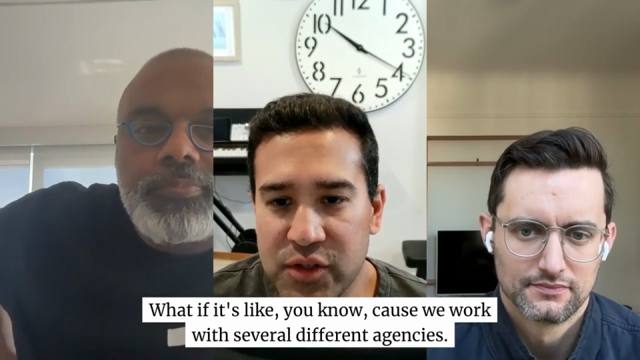
Krish Menon has built brands for Equinox, PepsiCo and plenty of other companies you’d recognize. He likes AI. He’ll also tell you, without hedging, that people are still very much needed.
“AI still sounds like AI,” he said on a recent episode of Building for Others. “AI still feels like AI.”
Working around that shaped the two internal tools Menon built for his brand consultancy, Angry Gods, and they have changed how his team works.
The chaff and the gold
Menon’s model is simple. Every creative project has two layers. The gold is the insight, the idea, the creative jump that only a sharp person can make. The chaff is the rest: research, competitive analysis, building frameworks, all the hours of groundwork you need before anyone can think clearly.
“The chaff for us is all of the grunt work that goes into researching and understanding and pulling together constructs for a company,” Menon explained. “There are things you can frameworkize, and that’s mostly strategy work.”
He thinks AI is very good at the chaff. It can pull research together, spot competitive patterns and lay out strategy frameworks faster than a room of analysts. What it can’t do is connect things nobody expected to connect. It can’t think weird.
“AI is not meant to do weird thinking,” Menon said. “It does weird thinking, but based off of what it thinks is weird. There’s no craziness inside of AI because it’s not been trained to do that.”
For agencies, and for any company that sells thinking, the real question is where to point AI, since using it at all is already settled.
Ghost: a brand strategy command center
To apply this to client work, Menon built Ghost, an internal brand strategy tool he describes as “an actual copilot” for brand strategists.
Ghost is a guided conversation built on 22 of the most common brand strategy frameworks, from Four C’s Analysis and Brand Pyramids to Simon Sinek’s Golden Circle and StoryBrand’s Seven-element Brand Script. The strategist doesn’t start from a blank page. Ghost starts a conversation: it asks questions, argues back and builds the strategy documents.
“I wanted to have someone sitting side by side with you as a strategist,” Menon said. “A smart thinking partner that would ask the right questions, go out and find the right information, pull the data together, but let the strategist make conscious decisions.”
So the AI does the research and the structure, and the person still owns the strategic thinking. Ghost can run a whole brand strategy project, a repositioning, a messaging framework, a naming exercise or a brand audit. It can also convert the output from one framework to another when a client prefers a particular method.
Ghost is built to disagree, and that matters. It questions what it’s given before building on it and offers alternatives. It checks whether the different parts of a strategy fit together and points out where they don’t. Menon designed it that way on purpose, which sets it apart from AI tools that agree with whatever the user types.
Athena: a talent network built for the freelance era
Menon’s second tool solves an earlier problem that comes before any client work: finding the right people.
Angry Gods runs on 65 collaborators and only two full-time employees. Menon chose that model after selling Phenomenon, his previous agency of 250 people, and it only works if he can find and line up top freelancers quickly. Job boards, LinkedIn posts and Behance searches weren’t made for that.
“Every good freelancer is always taken,” Menon said. “Figuring out when they have an opening is hard because there’s no central repository for this. There is no LinkedIn for agency freelancers.”
Athena is his fix. It’s a freelancer management platform with two halves: profiles that applicants fill out, and an AI talent scout. Freelancers apply, list their skills, rates and availability, and get scored against Angry Gods’ internal criteria. For a given brief, Athena suggests candidates and explains why each one fits and where the gaps are.
The scout searches LinkedIn, Medium, Substack and other sources live, matches people to open briefs and ranks them by fit. In the month before the episode was recorded, Angry Gods ran about 15 searches through Athena and hired seven people who showed up in the top three results. A friend’s agency used it for a role they’d been trying to fill for six weeks, and Athena found the person they ended up hiring in under two minutes.
Athena also sends newsletters to keep the freelancer network engaged, stores internal notes and ratings on candidates, and runs the contract paperwork once someone is hired.
Menon is deciding whether to sell Athena as a SaaS product. After a demo, two agency CEOs offered him $100,000 a year for access. What holds him back is competition: if Athena becomes the standard way the industry finds top freelancers, Angry Gods loses one of its biggest advantages.
Freelancers can apply to join the Athena network at athena.angrygods.com. Agencies that want to know more can email Krish directly at kmenon@angrygods.com.
The broader point
Many companies are still talking about putting AI on the process work so people can spend their time on judgment. Menon has it running at Angry Gods.
The two tools point in different directions, one at talent and one at client work, but they rest on the same belief: AI is most useful when it clears enough of the routine work out of the way that people have room to think, and least useful when it tries to do the thinking for them.
We think he’s right. The companies getting real value from AI didn’t hand their teams a chat window and hope. They worked out where the chaff was, pointed AI at it, and let their people do the work that needed them.
Sachin and the elvex team have been making the same case to large companies. elvex is the proactive enterprise AI platform built to give every knowledge worker that kind of help, not only the power users who would have figured it out on their own. Learn more about elvex.