
Calling 911 Isn't Always the Solution
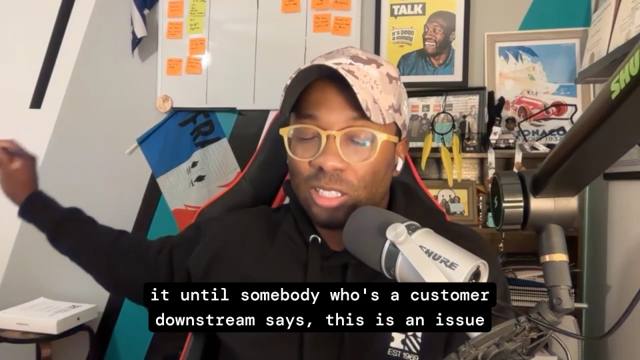
Christopher “CP” Richardson is the AI Insights and Engagement Lead at the Project Management Institute and Secretary of the Board of Directors for PMI Agile Alliance. He was a firefighter and first responder before moving into information science. He earned a master’s degree in project management and has worked at Capital One, NPR and The Washington Post, among others. He is also co-founder and head of operations at Vin Noir Explorers & Importers, the only minority-owned wine importer and distributor in North Carolina. Connect with CP on LinkedIn.
On this episode of Building For Others, CP talked with Sachin Kamdar and Doyle Irvin about building AI for other people. They covered an idea for proactive community paramedicine that came out of his firefighting years, AI governance at PMI, what he learned doing fraud detection at Capital One, and the sales agent he built on his own for the family wine business. He kept coming back to one idea: AI helps most when it understands the setting it works in, takes on the coordination work, and leaves people more time for each other.
A career built around giving other people a chance
Capital One, NPR, The Washington Post, public safety and now the Project Management Institute: across all of them, Richardson’s work has had the same aim, giving someone else a leg up.
Early on, he was answering phones during the 2009 financial crisis when someone noticed his computer science background and gave him a chance. That shaped how he thinks about technology now. Whether he’s helping project managers around the world make sense of AI or looking for better ways to deliver public services, he starts with what happens to the person on the receiving end.
AI can coordinate help before an emergency begins
Would you call 911 if you missed an appointment? For many people, there’s nothing else to call. In his four years as a firefighter, Richardson saw people call 911 about everything from heart attacks to missed dialysis appointments and trouble keeping track of their medication.
In a lot of communities, 911 is the default because people don’t have an obvious way to reach other services. Richardson’s point is that proactive AI could spot patterns in non-emergency calls, find the neighborhoods that need more support, and connect residents with rides, help with medication or community paramedics before the next emergency call happens.
The agent would do the coordinating, so firefighters, paramedics and caregivers could spend more time with people in person, on the serious problems their training and equipment are meant for.
Project managers are becoming AI’s coordination layer
As AI changes how projects get planned and run, Richardson hears project managers asking two separate questions.
The first: how can AI help me personally with my calendar, priorities, stakeholders and admin work?
The second: how can AI make a whole project or portfolio better on cost, quality and speed?
PMI is helping its members move from personal productivity experiments to frameworks for managing AI across projects, programs and portfolios. Richardson thinks project managers are very well placed to lead the move to AI, because their job already means coordinating stakeholders, getting through stage gates and turning plans into results.
Good governance means faster organizations with more effective experiments
Governance turns into a bottleneck when builders make an AI system on their own and only go to risk, legal and compliance for sign-off once it’s done.
Richardson says those teams should come in early enough to understand the system and help shape it as it’s built. When everyone shares the context, reviews go faster and employees know where the lines are. Done well, governance gives people an approved way to experiment, and those experiments can help careers grow as people take on more than they used to.
The two-person wine company that built its own sales agent
Richardson and his wife run Vin Noir Explorers & Importers, a wine importer and wholesaler. The two of them handle everything from compliance and logistics to marketing and sales. To make selling across the whole state manageable, Richardson built an agent that reads restaurant and retailer websites, goes through their wine lists, finds what’s missing and matches those gaps against a catalog of about 250 SKUs. It also finds the owner or beverage manager, drafts a message written for that business, and gives Richardson the account details he needs to follow up in person knowing what he’s talking about. So the cold outreach is based on real research instead of a generic sales template.
CP’s advice for builders
Keep a place for the ideas that sound a little crazy
His advice to builders was simple: try the idea. He keeps a running “crazy idea list” in Codex, adds to it when something occurs to him, and goes back later to decide which ideas deserve a real attempt.
AI has made it far cheaper to test a concept and get something real back. Not every experiment turns into a production system, but you no longer have to answer every question before building the first version.
Bias can enter through the system surrounding the model
An agent’s recommendations can lean one way even when no instruction tells it to. The data and decisions around it do the steering.
Richardson’s outreach agent picks wines from a portfolio he and his wife chose, so their taste for French and Italian wines limits what the agent can suggest. Enterprise systems have the same problem through their source data, the tools they can use, who reviews them, permissions and business rules. To judge an agent, you have to look past its prompt and model at everything it runs inside.
The most valuable context often comes from experience
The wine agent works because of details a general model wouldn’t know. It focuses on businesses the company can actually serve, takes licensing into account, doesn’t contact restaurants in the rush before dinner, and knows that Monday or Tuesday morning is often a better time to catch an owner. Because the company is in the Outer Banks, it also checks for hurricanes, fires and other disruptions before sending a sales email. Lessons like these are what turn a capable model into something a business can use.
“It works” is just the start of an AI project
Richardson compared today’s rush to build agents with his fraud model work at Capital One. Those fraud systems used 34 individual features, and every new transaction type or input had to be weighed, scored and tested.
Agents need the same steady attention. A new model, a new integration, a changed data source or one more feature can change how an agent behaves even when the workflow around it looks the same. Agents in production need a clear owner, regular evaluations and a way to recheck performance before customers find the problem.