
Every Department Becomes A Product Team
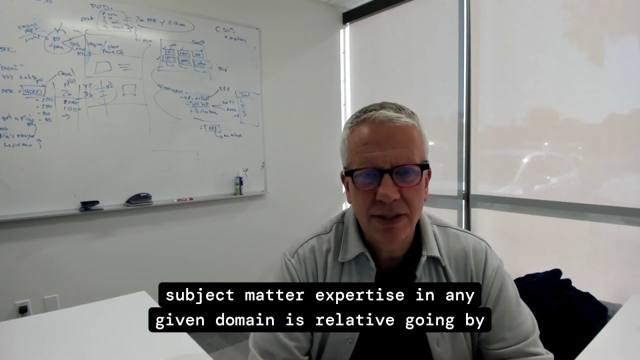
Tim Freestone is Chief Strategy Officer at Kiteworks, a data security company that serves as the control plane for secure data exchange, meaning the controls on how data moves between people and machines. For most of its 20-plus years, that meant managed file transfer and SFTP. Now the machines include AI agents that act on their own. Tim ran marketing organizations for 20 years, joined Kiteworks five years ago, and took the strategy job about a year and a half ago. His work is turning where the market is going into plans for product, sales and marketing. Kiteworks is roughly a $200 million company, and Tim calls it “a startup within an old company.”
His big idea is that every department will become a product team. What a department produces digitally is its product, so it should be staffed like a SaaS engineering team: AI engineers who build and tune the systems that make those outputs, and product managers who run the work and keep it pointed at goals. “Finance as a product, marketing as a product.” He’s setting up Kiteworks marketing this way now. There’s an engineer for prospect development, one for customer cross-sell, one for web properties and one for product marketing, with product management making sure they hit their targets.
To get there, list the inputs and outputs that depend on particular expertise and put an engineer on each. The mistake Tim sees is hiring one go-to-market engineer and expecting that person to cover all of marketing. Doyle compared that to the overloaded marketing ops teams of the 2010s, and Tim agreed: “I just don’t want people to repeat the 2010s.” It also changes who you hire. Functional expertise is losing value quickly, so the person you want leads with curiosity, and the interview question becomes “what have you built?” Sachin said he gave engineering students at NYU the same advice two and a half years ago.
The rest of the discussion
- Why most people “suck at AI”: they don’t know what’s possible, and they don’t want to change. Tim’s hot take from the prep call was that 98% of people at companies suck at AI. He has two reasons. First, knowing what’s possible takes obsessive attention (every YouTube short, every podcast, everyone worth following on X), and he figures maybe 2% of people put that in. Second, it takes willingness to change how you work, which he calls the biggest “who moved my cheese” moment people have ever faced. He thinks that curiosity is close to inborn, and without it “you’re just using it as an email writer.” Even at Kiteworks, after a push from the CEO down, he’d say, being generous, that 60% still suck at it and 40% are getting real value. Sachin added that the bigger gap may be ambition: the models can now do more than most people think to ask for.
- Adapting Kiteworks for agents was a light lift, because an agent is just another identity. Kiteworks already had APIs for machine-to-machine transfer. It built an MCP server so agents can work in plain language, and added identity and observability features that can tell a person from a machine. After that, its existing role-based and attribute-based access controls (RBAC and ABAC) apply to the new identity, with the same rules or new ones. Tim says the bigger change was in how they describe the product: showing how what Kiteworks has done for years applies to AI.
- Agent risk lives in three control planes, and you have to handle all three at once. Scaling access controls isn’t hard. Knowing what agents you have is. Tim’s three layers: find and identify the agents that are running, control what they can do (which tools, software, cloud and network they can reach), and control the data they touch. “There’s no journey anymore,” he says, so customers have to work on all three together. Kiteworks uses AI inside its own product to help customers write policies for specific kinds of data.
- Kiteworks runs on Kiteworks, from early RAG chatbots to a company-wide Claude Enterprise rollout. Tim admits they used to be the cobbler with holes in his shoes. Their customers live under much stricter rules (CUI, FISMA, finance, healthcare, government) than a tech company does. AI changed that. Two to two and a half years ago they used their own platform to separate out sensitive data for RAG chatbots, both customer-facing ones and internal HR bots. Today Claude Enterprise is rolled out across the company with Kiteworks’ MCP connector as the governance layer, and any sensitive data an agent needs passes through Kiteworks. As he puts it, “the less you have to think about being safe and secure as a user of agents, the better.” Sachin agreed that good governance makes teams faster, because people feel safe to move.
- AI-native vs. legacy companies: can incumbents still make the jump? Tim paraphrased Marc Andreessen on the a16z podcast: AI-native companies will wipe out most legacy companies that can’t make the switch. Sachin pointed out that Andreessen is biased by his startup bets. Tim agreed but said he sees it happening anyway. He placed Kiteworks, at $200 million, right at the point of being too bureaucratic to change direction. Sachin countered with the move from on-prem to cloud, which Adobe and Microsoft got through with strong leadership, and said companies like Ramp and Carta are rebuilding themselves now, even releasing their own harnesses. Tim’s reply: the cloud shift took 15 years, and nobody gets that long this time. Either way it depends on people redesigning how they work, because “AI will just sit there doing nothing until people get in line.” He doesn’t know whether that means more jobs or fewer, only that the companies that go along with the change will win.
- Closing advice: just do it, starting with two slow processes. The people creating the most value at Kiteworks, Tim says, are the ones who just start: “I have Claude, what’s stopping me? Me is stopping me.” If you can use words, you can build almost anything now, which wasn’t true a year ago. His assignment for his strategy and marketing teams: name two systems or processes that take far too long, write down the tool that would fix them, and ask Claude to build it. Doyle connected it to Nike’s “Just Do It” and a favorite early-90s Nike ad, and Sachin added Adidas’s “Impossible Is Nothing.”