The Skills That Actually Win in the AI Era
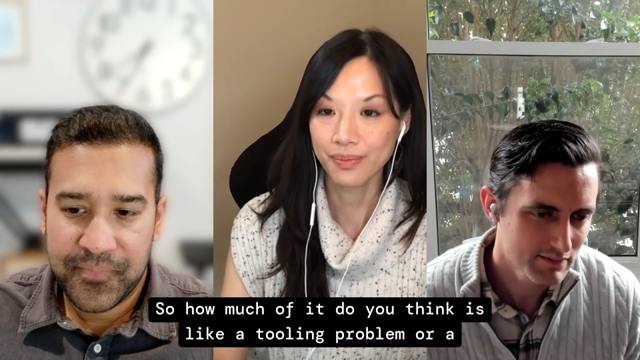
Stephanie Cheney is SVP of AI Strategy at Dualboot Partners, a custom digital solutions agency that takes companies through AI transformation from start to finish, with strategy, governance and technical implementation in one place. She holds an AI Governance Professional (AIGP) certification and writes often on LinkedIn. about putting AI into practice across an organization.
Before that, she owned a commercial media and photography business for 15 years. In her late 30s, during COVID, she switched careers into software engineering, going to a coding boot camp while her business was shut down. She became a managing director at a product studio and then joined Dualboot.
We talked about what her path means for anyone building a career in the AI era, why enterprise AI adoption keeps stalling, and an internal workflow Dualboot built, then had to rebuild, to fix a problem every sales team has.
The Business Background Was the Advantage, Not the Obstacle
When Stephanie moved into tech, she brought 15 years of running her own company: client work, business development and the judgment calls nobody gives you instructions for. Most people assumed that history was a detour she’d need to explain away. It turned out to be the reason she moved up quickly.
“It was really because of my business background that I was able to promote quickly in the technical industry,” she said. “And those skills are only getting more important.”
These aren’t soft skills in the throwaway sense. They’re rare where AI strategy meets enterprise change management. Few people can run a workshop with the C-suite, prioritize use cases with a product team, brief the legal team on what engineering is building, and then go build it in AWS. That profile usually takes two careers, and Stephanie has had both.
Her advice for anyone watching AI change their job is to look at where the market is heading and learn the neighboring skill before you need it. Engineers should be able to hold a business conversation. Business people should know enough about implementation to ask good questions. Product managers should be vibe-coding, or at least building some technical instinct.
“Get as cross-functional as you can,” she said. “That’s what gives you staying power.”
This goes beyond career planning. Among the companies Stephanie works with, the ones that make real progress on AI usually have someone working this way: a person or team that speaks both languages, owns the initiative and can move the whole organization, beyond the engineers.
Why AI Adoption Keeps Failing (It’s Not the Technology)
When a company stalls on AI, Stephanie doesn’t start by asking which model or vendor it chose. She starts by asking who owns it.
“If you don’t have people owning this within an organization, you don’t have a true operating model,” she said. “And when something goes out of bounds, a security incident, a data leak through an AI system, if you don’t have an escalation path, what do you do? You lock it down. You have no idea how to actually resolve it.”
She sees the same pattern all the time. A company gets excited, sets up a few tools, sends logins to a few hundred people and waits. What comes back is shadow AI, stalled adoption and rising costs, with no view of what any of it produces.
She told us about a call from the week before we recorded. A prospect said their company had shut off all AI access for everyone, effective that morning. There was no breach and no incident. Token use had gotten out of hand, and nobody had the monitoring or cost controls to see what was going on or whether it was worth the money. So they turned it all off.
“That tells me they had no controls in place to monitor usage, and no strategy to help their developers know when to use certain models or how to be efficient,” she said.
Her argument is that companies need an operating model first, before the tools, the agents or the ambitious use cases. That means clear ownership, policies people actually follow (beyond a written document), governance committees, escalation paths, and metrics and evals that show whether things are working. It also means real investment in the people side, beyond the technical build.
“If companies are on board with driving true AI adoption,” she said, “then you will be in a place of having true ROI and success. The problem is so many people went straight to the technology.”
Claude Is Not Multiplayer: The Sales Proposal Lesson
Dualboot built its sales proposal automation twice.
The first version ran in Claude. A salesperson fed in notes from a discovery call and got a solid first draft of a proposal. It worked, individual reps liked it, and the output was decent.
Then they tried to roll it out to the whole team, and it broke down. There was no shared knowledge base and no consistent context on Dualboot’s brand voice, scoping method or proposal structure. Two salespeople with the same inputs could get very different output. There was no monitoring, no evals and no alert when the agent produced something out of bounds. It was one person and a chat window, which is fine for that person and doesn’t carry over to anyone else.
“That ends up being individual instead of team-oriented,” Stephanie said. “That’s why we’re rebuilding this.”
The new version runs on AWS Agent Core. Several teams built the knowledge base together: marketing supplied brand voice and positioning, engineering supplied scoping and estimation frameworks, and sales supplied deal history and proposal patterns. A design system keeps format and styling consistent. The evals were defined upfront: specific elements that must appear in every proposal, with automatic reprocessing when one is missing. Human-in-the-loop checkpoints cover the calls that can’t be automated, like a CRO adjusting terms to close a deal.
They set 70% accuracy as the launch target and accepted it. They weren’t after perfection. They wanted a stable, governed baseline the whole team could use and improve on.
“We’re not looking for perfection today,” she said. “If it’s at 70%, we’re good with it. Let’s roll this out and keep improving as we go.”
The individual version only looked like it worked. The team version needed a shared knowledge base, consistent context, governance, monitoring, evals and a plan for when it gets something wrong. Most companies jump to the individual version and then can’t work out why adoption stops at the power users. The team version takes more work to build, and it’s the one that holds up across a whole team.
What to Ask a Potential AI Partner
Stephanie ended with advice for anyone choosing a partner or strategist to help with AI.
“Ask the hard questions,” she said. “If they come in hot with just technical implementation, to me that’s a red flag. The technical implementation is just going to get easier and easier. But if they really don’t understand the human side of that, everything that needs to surround the technical work, that’s a problem.”
She also keeps a close eye on the gap between legal and technical teams: lawyers who don’t understand the technical risk, and engineers who don’t understand the law. “If you’re rolling out AI and your partner doesn’t know how to bridge that gap, that’s a risk, even if you’re not in a regulated industry. Your company’s reputation could be on the line. Your data could be on the line.”
The bar she sets for Dualboot is strategy that carries through to the work, and governance and compliance that people actually practice, beyond what’s on paper. A good partner, in her view, knows why 70% accuracy with monitoring and a feedback loop beats 95% accuracy on paper with nobody watching.
Building for Others is a podcast hosted by Sachin Kamdar and Doyle Irvin of elvex. Guests need one qualification: they’ve built or led an AI initiative that other people actually use. New episodes come out regularly, so subscribe wherever you get your podcasts.