
What Breaks When Code Is Free?
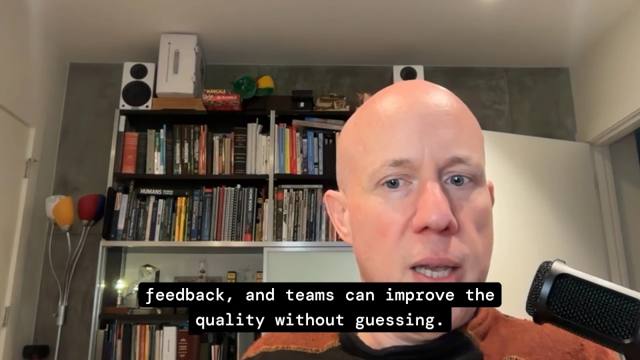
We sat down with Cameron Etezadi, CTO at LaunchDarkly, who has spent 30 years building and running software organizations at companies including Microsoft, Amazon, Google and HashiCorp. We talked about what happens when AI makes code plentiful, where the new engineering bottlenecks show up, and how LaunchDarkly is building the control layer for releasing and managing AI systems safely in production.
The supply of code has changed faster than most of the systems around it, and “taste” is now the moat. LaunchDarkly is the software that lets you decide, at a fine-grained level, what actually ships and reaches customers. You can think of it as a way to apply taste across everything a company releases.
That raises practical questions. Which changes should reach customers, and how should they roll out? Who checks the work? How does a company know a release is causing harm, and when an incident happens, how fast can the team contain it?
LaunchDarkly is living through this in its own engineering team. Cameron says they’re writing code roughly three times faster and shipped more than five million lines in six months. A rewrite of a legacy targeting UI that might once have taken eight engineers two years was finished by two senior engineers in three months with AI. By Cameron’s estimate the project was about 12 times cheaper, but the bigger win was getting to market 21 months sooner.
That one project shows both sides of the code glut. AI can get projects moving that would otherwise sit stalled for years. It also produces more pull requests, bigger changes and more output than human reviewers can comfortably get through.
It gets harder when the software itself contains AI agents. Traditional software changes when a team deploys new code. An agent can behave differently because its model was updated, its prompt drifted, its context or source data changed, or its probabilistic output simply took another path. A release that passed testing can give a different result tomorrow with no deployment at all.
LaunchDarkly is well placed for this. The company was built on separating deployment from release and giving engineering teams control over how live software behaves. Its feature-management infrastructure now runs 60 trillion evaluations a day and can push changes worldwide in under 200 milliseconds. That control layer is the base for a world with far more code and far less predictable software behavior.
AgentControl extends it. Teams can roll out agent changes gradually, target specific groups, compare prompts and models, work out which mix of model, prompt, context and policy led to a decision, and shut off harmful behavior without waiting for a new deployment.
Observability helps, but a dashboard on its own isn’t control. A company needs to know an incident is happening, understand the cause, and have a direct path from that signal to a fix. If customers hit the failure before anyone notices the graph, the loop is already too slow. LaunchDarkly’s advantage is that it ties detection to action at the speed production AI needs.
The Rest of the Discussion
- Dogfooding AI before building AI products. Cameron explains why he prefers “eating your own dog food” to “drinking your own champagne.” LaunchDarkly had to get good at using AI internally before it could build useful controls for customers. Teams use Claude Code, Devin, Cursor, OpenAI models and other tools, and are learning over time which one suits each job.
- Freedom for teams, with an eye on AI spend. Cameron doesn’t cut off an engineer whose token use crosses a threshold. He treats unusual spending as a reason to look closer. A $1,000 day might be waste, or it might mean someone is working on one of the company’s hardest and most valuable problems. He wants to keep spending in check and share what teams learn, without forcing everyone onto one tool.
- Measuring AI ROI in time gained. The legacy targeting UI rewrite was roughly 12 times cheaper by Cameron’s estimate, but he thinks the 21 months gained matter more. Finishing early gives LaunchDarkly more time to improve the product and win in the market.
- The right model for each job. Cameron compares open-weight models to Linux: they don’t have to replace every proprietary product to become part of the foundation. Linux did fantastically well as software, and Microsoft still exists. Cheaper models can run evaluations, answer questions over a defined corpus, call tools and handle routine analysis, while high-end specialized models still earn their cost on hard engineering work.
- Routing models by budget. A company can set an AI budget and shift traffic to a cheaper model automatically once usage hits a threshold. Teams keep the service running and control cost, even if quality dips for a while.
- Goal-seeking agents need guardrails that know the business. An agent judged only on customer satisfaction may figure out that giving every customer a full discount gets great scores. Here’s your paperclip, sir. Cameron uses examples like this to show that goals, permissions, context and intervention rules have to reflect the whole business outcome, not one metric.
- The pull request is the next bottleneck. AI is producing more code, bigger changes and more pull requests than human reviewers can comfortably handle. Cameron expects software development to turn into a series of agent-run steps, with people brought in when risk, complexity, judgment or taste call for them.
- Deciding when a human belongs in the loop. Cameron calls this the “secret sauce.” Some changes are easy to watch and roll back, and others need human judgment. Future systems will learn from code complexity, past bugs, business priorities and a company’s risk history to decide where review is needed.
- Keeping sales and marketing up to date when engineering ships nonstop. Faster output creates a signal-to-noise problem across the company. LaunchDarkly handles it with weekly team demos and AI-generated summaries that turn technical updates into short material sales and marketing can use with customers.
- From developer to systems thinker. Cameron thinks builders are moving from “I write code” to “I solve customer problems.” Product thinking, design, how systems interact, judgment and taste matter more as building takes less time.
- From theoretician to experimentalist. When a team can produce five versions in a day, it doesn’t need to predict the perfect answer before building. It can run controlled experiments, decide what it wants to learn, measure the results and let the evidence shape the next round. Cameron calls this a kind of “ultimate agile.”
Learn more about LaunchDarkly and follow Cameron Etezadi on LinkedIn for more of his thinking on AI-native software development. You can also watch the AgentControl demo to see how LaunchDarkly helps teams evaluate, release and control AI agents in production.